


What is a root canal treatment?
Root Canal Treatment
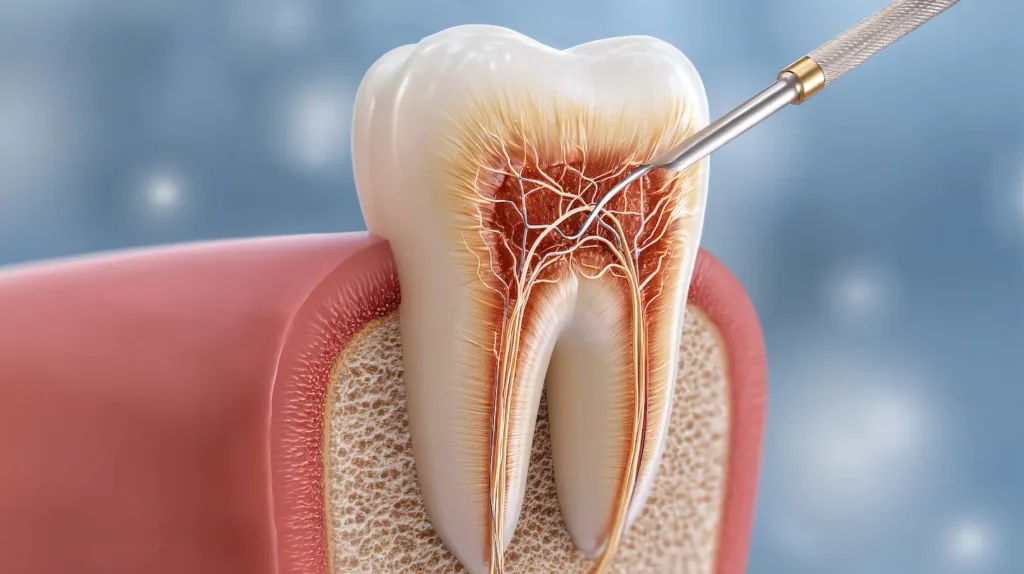
A root canal is a dental treatment used to save a tooth when the inner pulp has become infected, inflamed, or badly damaged. During the procedure, the affected tissue is carefully removed, the inside of the tooth is cleaned and sealed, and the tooth is restored to help protect it from further problems. Root canal treatment can relieve pain, remove infection, and preserve your natural tooth rather than needing it to be extracted.
Deep Tooth Decay
Root canal treatment is often needed when decay has progressed deep into the tooth and reached the inner pulp. Once the nerve and soft tissue become affected, the tooth may become painful, sensitive, or infected. Treating the inside of the tooth can help stop the problem from worsening and preserve the natural tooth.
Cracked or Broken Teeth
A cracked or broken tooth can expose the inner pulp to bacteria and irritation. When this happens, the tooth may become inflamed or infected, especially if the damage extends beyond the outer layers. Root canal treatment may be recommended to save the tooth and restore its function.
Infection or Dental Abscess
An infected tooth or dental abscess is another common reason root canal treatment may be needed. Signs can include swelling, ongoing pain, tenderness when biting, or a pimple-like area on the gums. Treating the infection inside the tooth helps relieve discomfort and reduce the risk of more serious complications.
Trauma or Repeated Dental Work
Teeth that have experienced trauma or multiple dental procedures over time may develop damage inside the pulp. Even if there is no immediate pain, the nerve can become inflamed or lose its vitality later on. In these situations, root canal treatment may be needed to protect the tooth and avoid extraction.
When are root canals needed?
Candidates for Root Canal Treatment
Root canal treatment is needed when the inner pulp of a tooth becomes infected, inflamed, or damaged and cannot heal on its own. This can happen as a result of deep decay, a cracked or broken tooth, repeated dental treatment on the same tooth, or trauma that affects the nerve inside. It is often recommended when a tooth is causing significant pain, sensitivity, swelling, or signs of infection, with the goal of saving the natural tooth and preventing the need for extraction.
General Dentistry Kid's Dentistry Cosmetic Dentistry Implant Dentistry
Book Your Appointment
Not sure where to start with your smile? We offer free cosmetic consultations
General Dentistry Cosmetic Dentistry Emergency Dentistry Children's Dentistry
Book Your Appointment

Free Cosmetic Consultations
Step 1
Step 2
Step 3
Step 4
Examination and Diagnosis
Cleaning the Canals
Sealing the Tooth
Final Restoration
The tooth is examined and X-rays are usually taken to confirm the infection or damage inside the tooth and plan the root canal treatment.
At the first appointment, the infected or inflamed pulp is removed and the inside of the tooth is carefully cleaned and disinfected.
Over the following appointment or appointments, the root canals are filled and sealed to help prevent further infection.
Once the tooth has been treated, it is usually restored with a filling or dental crown to protect it and return normal strength and function.
What's the process of getting a root canal?
The Process of a Root Canal
Root canal treatment is usually completed over two to three appointments, depending on the condition of the tooth and the extent of the infection. During the first visit, the tooth is examined, the affected pulp is removed, and the canals are carefully cleaned and disinfected, with medication sometimes placed inside the tooth between appointments. At the following visit or visits, the canals are sealed and the tooth is restored, often with a filling or dental crown, to protect it and return strength and function.
Examination and Diagnosis
The tooth is examined and X-rays are usually taken to confirm the infection or damage inside the tooth and plan the root canal treatment.
Cleaning the Canals
At the first appointment, the infected or inflamed pulp is removed and the inside of the tooth is carefully cleaned and disinfected.
Sealing the Tooth
Over the following appointment or appointments, the root canals are filled and sealed to help prevent further infection.
Final Restoration
Once the tooth has been treated, it is usually restored with a filling or dental crown to protect it and return normal strength and function.
POPULAR SERVICES WE OFFER
Our Treatments
Check Up & Cleans
Keep your smile healthy with a regular check-up and clean at Anzac Avenue Dental. We recommend coming in every six months.
General Dentistry
When a tooth is damaged, decayed, or broken, restorative treatment can get it back to full function. We offer fillings, crowns, bridges, and root canal treatment to repair the tooth.
Children's Dentistry
Children’s dentistry is all about building healthy habits early, helping little smiles grow strong with gentle, friendly care that keeps kids calm and confident at every visit.
Dental Implants
Dental implants are the gold standard for a permanent, natural-looking replacement. At Anzac Avenue Dental, we’ll have you smiling with confidence again.
Veneers
Veneers are a simple way to completely transform your smile, covering imperfections with thin, custom-made shells for a flawless, natural-looking result.
Clear Aligners
Straighten your teeth without the metal brackets. Clear removable aligners gradually shift your teeth into place without anyone even noticing.
Teeth Whitening
Teeth whitening is one of the fastest ways to refresh your smile, using professional-grade treatment to safely lift stains and reveal a brighter, more confident you.
TMJ Pain
Jaw pain, clicking, or frequent headaches can all be signs of a TMJ problem. We can assess what’s going on and recommend treatment options that may help reduce discomfort and protect your teeth.
Snoring & Sleep Apnoea
Snoring and sleep apnoea can affect your health and the sleep of everyone around you. Dental appliances are one option that may help by keeping the airway open during sleep.
IV Sedation & General Anaesthetic
Sleep Dentistry

If fear or anxiety has been keeping you out of the dentist’s chair, sleep dentistry may be worth considering. Using IV sedation or general anaesthetic, we can carry out a wide range of treatments, from routine check-ups through to more complex procedures, while you rest comfortably. For many patients, it makes dental care feel manageable again.
Payment Plans
At Anzac Avenue Dental, we know dental treatment doesn’t always fit neatly into your budget, so we offer a range of flexible payment plan options to make it easier.

Cosmetic Dentistry General Dentistry Children's Dentistry Implant Dentistry
Book Your Appointment
Free Cosmetic Consultations
FAQ's
What is a root canal treatment?
A root canal is a dental procedure used to treat infection or damage inside a tooth. It involves removing the affected pulp, cleaning the root canals, and sealing the tooth to help save it and restore function.
When is a root canal needed?
Root canal treatment may be needed when the inner pulp of a tooth becomes infected, inflamed, or damaged due to deep decay, trauma, cracks, or repeated dental work. It is often recommended when a tooth cannot recover on its own and needs treatment to prevent extraction.
What are the signs that I might need a root canal?
Common signs can include persistent tooth pain, sensitivity to hot or cold, swelling, discomfort when biting, or a darkened tooth. In some cases, an infection may also cause tenderness in the gums or a pimple-like spot near the affected tooth.
Is root canal treatment painful?
Root canal treatment is performed to relieve pain caused by infection or inflammation inside the tooth. During the procedure, the area is numbed to keep you comfortable, and most patients find it similar to having a filling done.
How many appointments does a root canal take?
Root canal treatment is usually completed over two to three appointments, depending on the condition of the tooth and whether infection is present. Some teeth may require additional care before the final restoration is placed.
Can a root canal save my natural tooth?
Yes, a root canal is designed to save your natural tooth by removing the infection and preserving the remaining tooth structure. Keeping the natural tooth is often beneficial for maintaining normal chewing, bite alignment, and long-term oral health.