


What is a dental crown?
Dental Crowns
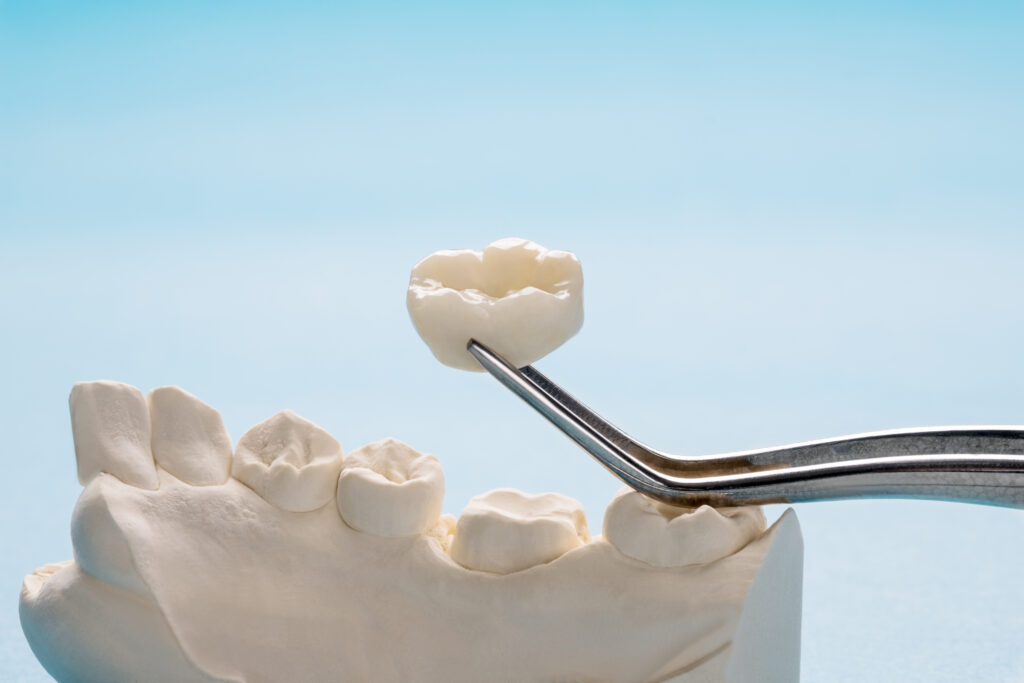
Dental crowns are a durable and natural-looking solution used to restore teeth that are weakened, damaged, worn down, or heavily filled. Designed to cover and protect the visible part of the tooth, a custom crown can improve strength, function, and appearance while helping to prevent further deterioration.
Crowns are often recommended after large fillings, root canal treatment, fractures, or significant tooth wear, making them a reliable option for rebuilding your smile and supporting long-term oral health.
Teeth Weakened by Large Fillings
When a tooth has a large filling, there may not be enough healthy structure left to support normal biting forces. Over time, this can increase the risk of cracking or further damage. A dental crown helps reinforce the tooth by covering it fully and restoring strength and stability.
Chipped, Cracked or Worn Teeth
Teeth that are cracked, fractured, chipped, or worn down can become painful, sensitive, and more vulnerable to ongoing damage. In these situations, a crown can protect the remaining tooth while improving its shape and function. This type of restoration is often recommended when a tooth cannot be reliably repaired with a simple filling.
After Root Canal Treatment
Following root canal treatment, a tooth can become more brittle because the inner nerve tissue has been removed. A dental crown is often placed over the tooth to protect it from breaking and to help it function normally again. This is especially important for back teeth, which handle greater chewing pressure.
Misshapen or Severely Damaged Teeth
Dental crowns may also be used when a tooth is badly damaged, misshapen, or affected by severe discolouration that cannot be improved with simpler cosmetic treatment. By covering the visible part of the tooth, a crown can create a more even and natural-looking appearance. At the same time, it helps restore everyday comfort and confidence when eating, speaking, and smiling.
When are dental crowns needed?
Candidates for Crowns
Dental crowns are often needed when a tooth is no longer strong enough to function properly on its own and requires added protection and support. They are commonly recommended for teeth that are badly damaged by decay, weakened by large fillings, cracked or fractured, worn down over time, or treated with root canal therapy. A crown can also be used to improve the shape and appearance of a tooth that is misshapen or severely discoloured, while restoring strength, bite function, and a more natural look. In many cases, dental crowns help preserve an existing tooth and prevent the need for more extensive treatment in the future.
Book Your Appointment
Not sure where to start with your smile? We offer free cosmetic consultations

Step 1
Step 2
Step 3
Step 4
Examination and Treatment Planning
Tooth Preparation
Temporary Crown Placement
Final Crown Fitting
Your dentist examines the tooth, may take X-rays, and will confirm the treatment.
The tooth is carefully shaped and prepared so the custom crown can fit securely and look natural.
A temporary crown is placed to protect the tooth while the final restoration is being made.
The permanent crown is checked for fit and comfort before being securely bonded into place.
What's the process of getting a dental crown?
The Process
Getting a dental crown usually takes two appointments. At the first visit, your dentist examines the tooth, takes X-rays if needed, and prepares it by reshaping the outer surface so the crown can fit securely. An impression or digital scan is taken and sent to the lab, and a temporary crown is placed to protect the tooth in the meantime. At the second appointment, the temporary crown is removed, the permanent crown is checked for fit and colour, and once everything looks right, it is bonded into place.
Examination and Treatment Planning
The process begins with a dental examination to assess the condition of the tooth and determine whether a crown is the most suitable treatment. X-rays may also be taken to check the tooth structure, roots, and surrounding bone. Once the tooth is evaluated, a treatment plan is created based on its strength, function, and appearance.
Tooth Preparation
The tooth is gently reshaped so the crown can fit securely and look natural alongside the surrounding teeth. If the tooth has significant damage or not enough structure remaining, it may need to be built up before the crown is placed. Impressions or digital scans are then taken to create a custom-made crown.
Temporary Crown Placement
While the final crown is being made, a temporary crown is usually placed over the prepared tooth to protect it. This helps maintain comfort, appearance, and function in the meantime. Temporary crowns are worn until the permanent restoration is ready for fitting.
Final Crown Fitting
Once the custom crown is ready, it is carefully checked for fit, shape, colour, and bite. Any small adjustments are made to ensure it feels comfortable and functions properly. The crown is then securely bonded into place to restore the tooth’s strength, appearance, and everyday use.
POPULAR SERVICES WE OFFER
Our Treatments
Check Up & Cleans
Keep your smile healthy with a regular check-up and clean at Anzac Avenue Dental. We recommend coming in every six months.
General Dentistry
When a tooth is damaged, decayed, or broken, restorative treatment can get it back to full function. We offer fillings, crowns, bridges, and root canal treatment to repair the tooth.
Children's Dentistry
Children’s dentistry is all about building healthy habits early, helping little smiles grow strong with gentle, friendly care that keeps kids calm and confident at every visit.
Dental Implants
Dental implants are the gold standard for a permanent, natural-looking replacement. At Anzac Avenue Dental, we’ll have you smiling with confidence again.
Veneers
Veneers are a simple way to completely transform your smile, covering imperfections with thin, custom-made shells for a flawless, natural-looking result.
Clear Aligners
Straighten your teeth without the metal brackets. Clear removable aligners gradually shift your teeth into place without anyone even noticing.
Teeth Whitening
Teeth whitening is one of the fastest ways to refresh your smile, using professional-grade treatment to safely lift stains and reveal a brighter, more confident you.
TMJ Pain
Jaw pain, clicking, or frequent headaches can all be signs of a TMJ problem. We can assess what’s going on and recommend treatment options that may help reduce discomfort and protect your teeth.
Snoring & Sleep Apnoea
Snoring and sleep apnoea can affect your health and the sleep of everyone around you. Dental appliances are one option that may help by keeping the airway open during sleep.
IV Sedation & General Anaesthetic
Sleep Dentistry

If fear or anxiety has been keeping you out of the dentist’s chair, sleep dentistry may be worth considering. Using IV sedation or general anaesthetic, we can carry out a wide range of treatments, from routine check-ups through to more complex procedures, while you rest comfortably. For many patients, it makes dental care feel manageable again.
Payment Plans
At Anzac Avenue Dental, we know dental treatment doesn’t always fit neatly into your budget, so we offer a range of flexible payment plan options to make it easier.

FAQ's
What is a dental crown?
A dental crown is a custom-made cap that fits over a tooth to restore its shape, strength, and appearance. It is commonly used when a tooth has been weakened by damage, decay, wear, or a large filling and needs more support than a standard filling can provide.
When is a dental crown needed?
A dental crown may be recommended when a tooth is cracked, broken, heavily filled, worn down, or treated with root canal therapy. It can also be used to improve the appearance of a misshapen or severely discoloured tooth while protecting the remaining tooth structure.
How long does a dental crown last?
The lifespan of a dental crown can vary depending on the material used, your oral hygiene habits, and how much pressure the tooth is placed under each day. With proper care and regular dental check-ups, crowns can often last for 10-20 years.
Is getting a dental crown painful?
The procedure is generally comfortable because the tooth and surrounding area are numbed before treatment begins. Some patients may notice mild sensitivity afterward, but this usually settles as the tooth adjusts to the new restoration.
How many appointments are needed for a dental crown?
Traditional dental crowns are often completed over two visits, with one appointment for preparing the tooth and another for fitting the final crown. In some cases, the process may vary depending on the type of crown and the treatment approach used by the dental clinic.
What is the difference between a dental crown and a filling?
A filling is used to repair a smaller area of damage within a tooth, while a dental crown covers the entire visible portion of the tooth for added protection. Crowns are usually recommended when the tooth needs greater reinforcement or has lost too much structure to be restored predictably with a filling alone.