



General Dentistry · Kallangur

Root Canal Treatment in Kallangur

Treat an infected tooth and help save it. With local anaesthetic, and sedation if you need it.

Toothache, Infected Teeth, Tooth Abscess, Crowns After Root Canal

Ways to pay
  • ATO Super Release
  • National Dental Plan
  • Smile Right
  • TLC Total Lifestyle Credit

What is a root canal treatment?

Root Canal Treatment

Kallangur Root Canal Treatment

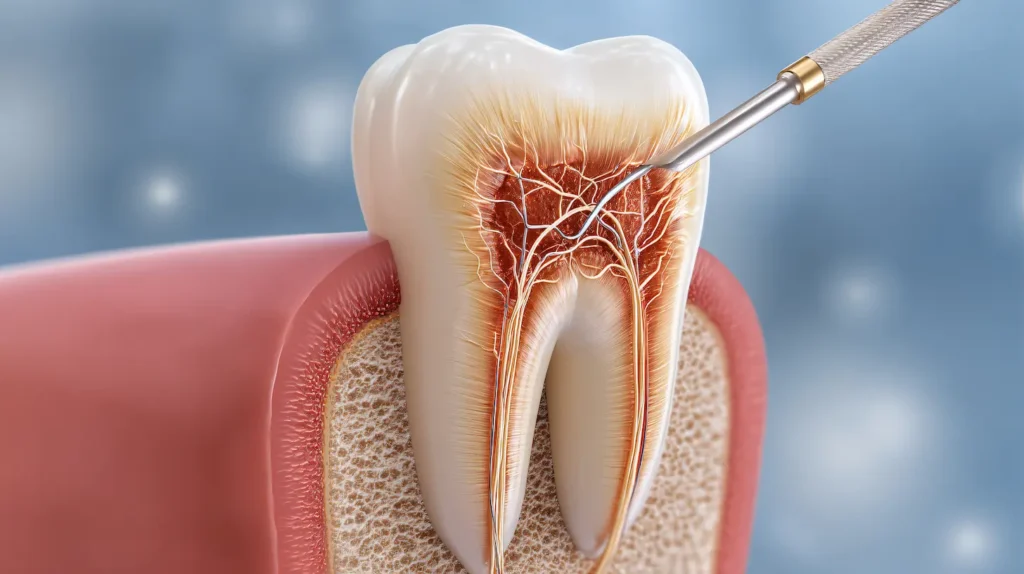
A root canal is a dental treatment used to save a tooth when the inner pulp has become infected, inflamed, or badly damaged. During the procedure, the affected tissue is carefully removed, the inside of the tooth is cleaned and sealed, and the tooth is restored to help protect it from further problems. Root canal treatment can relieve pain, remove infection, and preserve your natural tooth rather than needing it to be extracted.

Kallangur Root Canal Treatment

Root canal treatment is often needed when decay has progressed deep into the tooth and reached the inner pulp. Once the nerve and soft tissue become affected, the tooth may become painful, sensitive, or infected. Treating the inside of the tooth can help stop the problem from worsening and preserve the natural tooth.

A cracked or broken tooth can expose the inner pulp to bacteria and irritation. When this happens, the tooth may become inflamed or infected, especially if the damage extends beyond the outer layers. Root canal treatment may be recommended to save the tooth and restore its function.

An infected tooth or dental abscess is another common reason root canal treatment may be needed. Signs can include swelling, ongoing pain, tenderness when biting, or a pimple-like area on the gums. If symptoms come on suddenly, our dental emergency guide explains what to do while you wait to be seen. Treating the infection inside the tooth helps relieve discomfort and reduce the risk of more serious complications.

Teeth that have experienced trauma or multiple dental procedures over time may develop damage inside the pulp. Even if there is no immediate pain, the nerve can become inflamed or lose its vitality later on. In these situations, root canal treatment may be needed to protect the tooth and avoid extraction.

When are root canals needed?

Candidates for Root Canal Treatment

Root canal treatment is needed when the inner pulp of a tooth becomes infected, inflamed, or damaged and cannot heal on its own. This can happen as a result of deep decay, a cracked or broken tooth, repeated dental treatment on the same tooth, or trauma that affects the nerve inside. It is often recommended when a tooth is causing significant pain, sensitivity, swelling, or signs of infection, with the goal of saving the natural tooth and preventing the need for extraction.

Book Your Appointment

Not sure where to start with your smile? We offer free cosmetic consultations

Book Your Appointment

Dental Care in Kallangur

Free Cosmetic Consultations 

Step 1

Step 2

Step 3

Step 4

Examination and Diagnosis

Cleaning the Canals

Sealing the Tooth

Final Restoration

The tooth is examined and X-rays are usually taken to confirm the infection or damage inside the tooth and plan the root canal treatment.

At the first appointment, the infected or inflamed pulp is removed and the inside of the tooth is carefully cleaned and disinfected.

Over the following appointment or appointments, the root canals are filled and sealed to help prevent further infection.

Once the tooth has been treated, it is usually restored with a filling or dental crown to protect it and return normal strength and function.

What's the process of getting a root canal?

The Process of a Root Canal

Root canal treatment is usually completed over two to three appointments, depending on the condition of the tooth and the extent of the infection. During the first visit, the tooth is examined, the affected pulp is removed, and the canals are carefully cleaned and disinfected, with medication sometimes placed inside the tooth between appointments. At the following visit or visits, the canals are sealed and the tooth is restored, often with a filling or dental crown, to protect it and return strength and function.

The tooth is examined and X-rays are usually taken to confirm the infection or damage inside the tooth and plan the root canal treatment.

At the first appointment, the infected or inflamed pulp is removed and the inside of the tooth is carefully cleaned and disinfected.

Over the following appointment or appointments, the root canals are filled and sealed to help prevent further infection.

Once the tooth has been treated, it is usually restored with a filling or dental crown to protect it and return normal strength and function.

Dentist looking through a dental microscope

Fees and payment plans

Spread the cost of your treatment

Dental care doesn't always fit neatly into a budget. You'll get a written fee estimate before we start, and you can choose a way to pay that suits you.

  • Payment plansNational Dental Plan, Smile Right and TLC
  • Pay in 4Afterpay, in fortnightly instalments
  • Use your superEarly release through the ATO
  • Health fundsMost major funds, with HICAPS
Ways to payPayment providers we work with
  • ATO
  • National Dental Plan
  • Smile Right
  • TLC Total Lifestyle Credit
  • Also:
  • Afterpay
  • Humm
  • HICAPS

Nervous about the dentist?

Sleep dentistry for nervous patients

Patient resting under sedation while the dental team works IV sedation here in Kallangur

If worry has kept you away, sedation may help. You stay relaxed and drowsy while we work, from a check-up to longer treatment.

  • IV sedation in the clinic
  • General anaesthetic at a Chermside day surgery

FAQs

Root canal treatment questions, answered

Answers to the things patients ask us most. Can't see your question? Get in touch.

Still have a question?

Our team is happy to help. Call us or book a time that suits you.

Root canal treatment removes infected or damaged pulp from inside a tooth, cleans the canals and seals them. It's done to save the tooth.

Ongoing toothache, lingering sensitivity to hot or cold, pain when biting, swelling, a darkening tooth, or a pimple on the gum. If you have a toothache or swelling, call us promptly.

The tooth is numbed, so most people find it similar to having a filling. It's often done to relieve the pain an infection is causing. Sedation is available if you're nervous.

Usually two or three, depending on the tooth and whether there's infection. Most teeth need a crown afterwards to protect them.

Which tooth it is, how many canals it has, how complex the infection is, and whether you need a crown afterwards. You'll get a written fee estimate before treatment.

In many cases, yes. Keeping your natural tooth helps with chewing and keeps your bite stable.

Still have a question?

Our team is happy to help. Call us or book a time that suits you.