

Do I Need My Wisdom Teeth Out? Signs, Timing and Recovery
Wisdom teeth are the last teeth to arrive, usually somewhere between the late teens and mid twenties. For some people they come through without any fuss. For others there simply isn't enough room, and the teeth get stuck, grow in at an angle or only partly break through the gum. If you have been wondering whether your wisdom teeth need to come out, this guide explains the common signs, what your dentist looks for on an X-ray, when removal is usually suggested and what recovery tends to look like. If you would like a personal opinion, our wisdom teeth removal team in Kallangur can take a look.
What Are Wisdom Teeth?
Wisdom teeth are your third molars, the teeth right at the back of your mouth. Most adults have four, one in each corner, although some people have fewer or none at all. Because they are the last teeth to develop, there is often not much space left in the jaw by the time they try to come through.
When a wisdom tooth cannot come through properly it is called "impacted". An impacted tooth may be tilted forwards into the tooth next to it, lying sideways, or sitting partly under the gum. Impacted wisdom teeth do not always cause symptoms, which is why regular check ups and X-rays matter.
Common Signs Your Wisdom Teeth May Need Attention
Some people notice their wisdom teeth straight away. Others only find out at a routine check up. Signs worth getting checked include:
- Pain, pressure or a dull ache at the back of the jaw
- Red, swollen or tender gum around a tooth that is partly through
- A bad taste or bad breath that keeps coming back
- Food getting trapped at the back of the mouth
- Difficulty opening your mouth fully, or jaw stiffness
- Swelling in the face or a sore throat near the back teeth
A partly erupted wisdom tooth can trap food and bacteria under a flap of gum. This can lead to an infection called pericoronitis, which can make the area very sore. If you have swelling, a fever or trouble swallowing, call a dentist promptly or see our emergency dental guide.
What Your Dentist Looks for on an X-ray
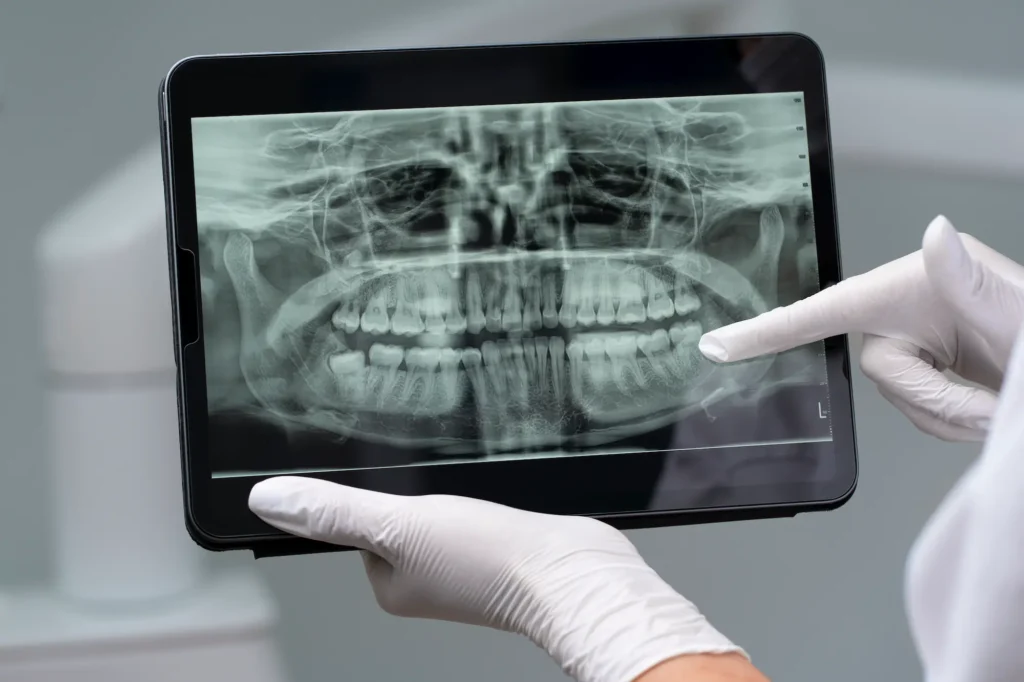
You cannot see much of a wisdom tooth by looking in the mirror, so an X-ray is the key step. Most clinics use a full mouth X-ray called an OPG, which shows all of your teeth, the roots and the jaw in one image.
On the X-ray your dentist checks the angle of each wisdom tooth, how much room there is to come through, whether the tooth is pushing on the molar in front of it, and how close the roots sit to the nerve in the lower jaw. They also look for decay or bone changes around the tooth. This information helps work out whether a tooth can be left alone and monitored, or whether removal is the safer option.
When Is Removal Usually Recommended?
Not every wisdom tooth needs to come out. If a tooth has come through straight, can be cleaned well and is not causing problems, your dentist may simply keep an eye on it at each check up.
Removal is more often suggested when a tooth is causing repeated infections or pain, is damaging the tooth next to it, has decay that cannot be easily repaired, or is sitting in a position that makes cleaning very difficult. Many dentists also find that removal tends to be more straightforward in younger adults, when the roots are not fully formed and the bone is a little more flexible.
That is why the end of the school year is a popular time to book. Year 12 leavers and uni students often use the summer break, so there is time to rest without missing exams or classes.
What Happens on the Day
Before anything goes ahead, your dentist will talk you through the plan, how many teeth are involved and what to expect. Many wisdom teeth can be removed in the chair under local anaesthetic, which numbs the area so you feel pressure but should not feel sharp pain.
If you are nervous, or more than one tooth needs to come out, you can ask about sleep dentistry options for nervous patients. Your dentist will explain which options suit your situation and how to prepare beforehand.
Wisdom Teeth Recovery: Day by Day
Everyone heals differently, but here is a general guide to what recovery often looks like:
- Day 1: Some bleeding and numbness is normal. Bite gently on gauze, rest with your head raised and avoid hot drinks while you are numb.
- Days 2 to 3: Swelling and stiffness usually peak. A cold pack on the cheek and the pain relief your dentist recommends can help. Stick to soft, cool foods.
- Days 4 to 5: Most people start to feel more comfortable. Gentle warm salt water rinses can help keep the area clean.
- Days 6 to 7: Many people are back to most normal foods. Keep chewing away from the area until it feels settled.
To help healing, avoid smoking, straws and spitting forcefully for the first few days, as these can disturb the blood clot that forms in the socket. If pain gets worse after day 3, or you notice a bad taste or swelling that isn't settling, contact your dentist so they can check for a dry socket or infection.
Getting Your Wisdom Teeth Checked in Kallangur
If you live in Kallangur, Murrumba Downs or North Lakes, our clinic on Anzac Avenue is close by for the check up, the X-ray and any follow up visits. The first step is simply an examination so we can see what your wisdom teeth are doing and talk through your options. Visit our wisdom teeth removal page to learn more about how we can help.
Frequently Asked Questions
Do all wisdom teeth need to be removed?
+
No. Wisdom teeth that have come through straight, can be cleaned properly and are not causing problems can often stay. Your dentist will check them at your regular visits and let you know if anything changes.
What is the right age to have wisdom teeth removed?
+
There is no single right age. Removal is often simpler in the late teens and early twenties, when the roots are still forming, but it is based on what the X-ray shows and whether the teeth are causing problems.
Does wisdom tooth removal hurt?
+
The area is numbed with local anaesthetic, so you should feel pressure rather than sharp pain during the procedure. Some soreness and swelling afterwards is normal and is usually managed with pain relief your dentist recommends. Sleep dentistry may be an option for nervous patients.
How long does wisdom teeth recovery take?
+
Most people feel noticeably better within 3 to 5 days and are back to most normal foods in about a week. Full healing of the bone takes longer, but this usually happens without you noticing.
What can I eat after wisdom teeth removal?
+
Stick to soft, cool foods for the first few days, such as yoghurt, smoothies eaten with a spoon, soup that has cooled, mashed potato and scrambled eggs. Avoid crunchy, chewy or spicy foods until the area settles.
What is a dry socket?
+
A dry socket happens when the blood clot in the socket is lost too early, leaving the bone exposed. It usually causes worsening pain a few days after removal. Contact your dentist if this happens, as it can be treated.
We see patients for wisdom teeth removal from Kallangur and the surrounding suburbs, including Murrumba Downs, Petrie, Griffin, Dakabin, Mango Hill, North Lakes and beyond.
Wondering about your wisdom teeth?
If you have pain at the back of your jaw, or you just want to know what your wisdom teeth are doing, book an appointment and we will take a look, explain what we see and talk you through your options in plain English.
Book an AppointmentThis article is general information only and is not a substitute for personalised dental advice. Suitability for any treatment depends on an individual clinical assessment. Please speak with a dentist about your specific circumstances.